
And yet the channel has an ethics of its own. “Tukang copy” implies craft as much as copycatting. There’s an editorial loop: trimming, re-captioning, timing the forward so it lands at peak irritation or delight. A five-second clip becomes a meme’s DNA. A six-minute voice note becomes a campfire sermon. The aesthetic choices — grainy filters, overlaid stickers, the occasional dripping-heart emoji — signal allegiance to a particular online tribe. It’s not only about being seen; it’s about being recognized by people who speak the platform’s shorthand.
Still, there’s artistry in the hustle. To run a channel like Wondergurl’s requires a keen ear for rhythm and a sharper eye for pattern recognition. It’s editing as choreography — compressing cultural noise into beats that land. The timestamps (5-05-06 Min) read like a playlist, a promise that the next drop will be quick, reliable, and calibrated to disrupt boredom. In a landscape where everyone’s trying to catch attention, reliability is a rare commodity: you know what you’ll get, and you return for the predictable jolt.
Wondergurl arrives like a notification that refuses to be ignored: neon handle, blurred avatar, and a trail of forwards that smell faintly of midnight. On Telegram she’s less a person than a persona — a curated splice of sass, unfiltered links and the kind of catchphrases that become social-media sticky notes. The channel name reads like a cipher: Wondergurl —TELEGRAM— -tukang copy —5-05-06 Min. It promises speed, repetition and a certain mischievous thrift: remixes of the internet, re-sent and re-sold to anyone who wants the vibe without the sourcing. Wondergurl -TELEGRAM- -tukang copy -5-05-06 Min
But the economy behind these forwards is quiet and complex. Attention is currency; forwards are transactions. Channels like Wondergurl function as micro-broadcasters for an attention-hungry marketplace. They aggregate eyeballs, sell clout in the form of engaged forwards, and — subtly — steer narratives. When content is divorced from source, truth becomes negotiable. The same lazily edited clip can inflame, amuse or neutralize depending on the caption it wears. In that liminal space between originality and replication, power consolidates not at the center but in the hands of repeaters.
“Tukang copy” translates from Indonesian as “copyworker” — someone who duplicates, translates and repackages content. In Wondergurl’s hands that phrase is both job title and badge of honor. She’s part archivist, part peddler: screenshots plucked from long-dead Stories, voice notes clipped and looped until they feel like incantations, micro-threads stitched into a new mythology. Her feed hums with the logic of replicability: 5-05-06 Min. A timestamp, a shorthand, a promise of bite-sized consumption. Min — minimal, minute, minute-long drops — signals the channel’s rhythm: rapid, repeatable, instantly digestible. And yet the channel has an ethics of its own
There’s also a social alchemy at work: belonging formed through mimicry. Fans emulate the format — the pace, the snark, the shorthand timestamps — creating a distributed band of mimic-makers. That mimicry is performative solidarity: you feed the channel, the channel feeds you. Repeat offenders are rewarded with in-jokes and badges of recognition; new recruits are inducted via a curated highlight reel of the “best hits.” Through repetition, ephemeral content acquires gravitas; a forwarded clip gains the weight of consensus simply by crossing enough screens.
In the end, Wondergurl is a mirror held up to the modern attention economy. She’s not solely creator or curator, thief or saint — she’s the operator of a relay. For some, that relay is a lifeline to humor and community; for others, it’s an accelerant for noise and ethical drift. Either way, channels like hers are a symptom and a cause: symptom of a culture that prizes immediacy over provenance, cause of a media ecology where repetition confers authority. We forward, we laugh, we judge, and we forward again — and somewhere between the repeats, a new kind of folklore is being stitched, one forwarded minute at a time. A five-second clip becomes a meme’s DNA
There’s a democracy to the aesthetic. Wondergurl trades in fragments: a celebrity gaffe, a closet confession, a political hot-take, a consumerist tease. Originals are optional. What matters is shareability, the thrill of immediate resonance. Telegram’s architecture — channels, forwards, anonymity — is the perfect soil. Here content migrates faster than attribution; context is optional and ambiguity is the fertilizer for virality. Wondergurl’s followers don’t ask where a clip came from nearly as often as they ask whether it’s funny, scandalous, or clickable.
Add Sense for Chrome works in both the build-in Sense client and in mashups using the Capabilities APIs
Charts displayed with the API through getObject and visualization.show will be tagged.
Used app(s) will be displayed in the bottom right corner.
Properties and other buttons will work just as in the client.
If your mashup shows charts from more than one app, all will be listed.
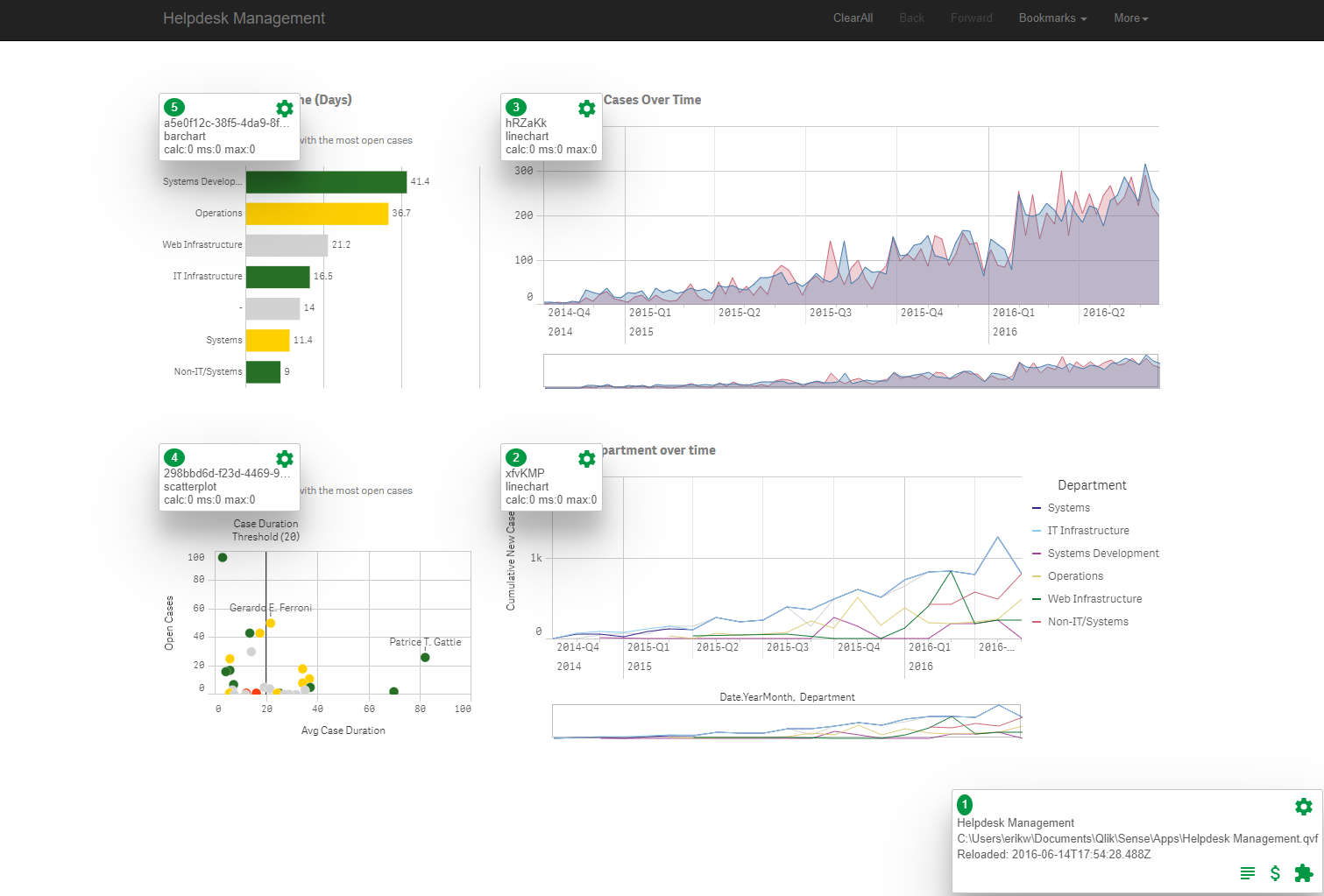
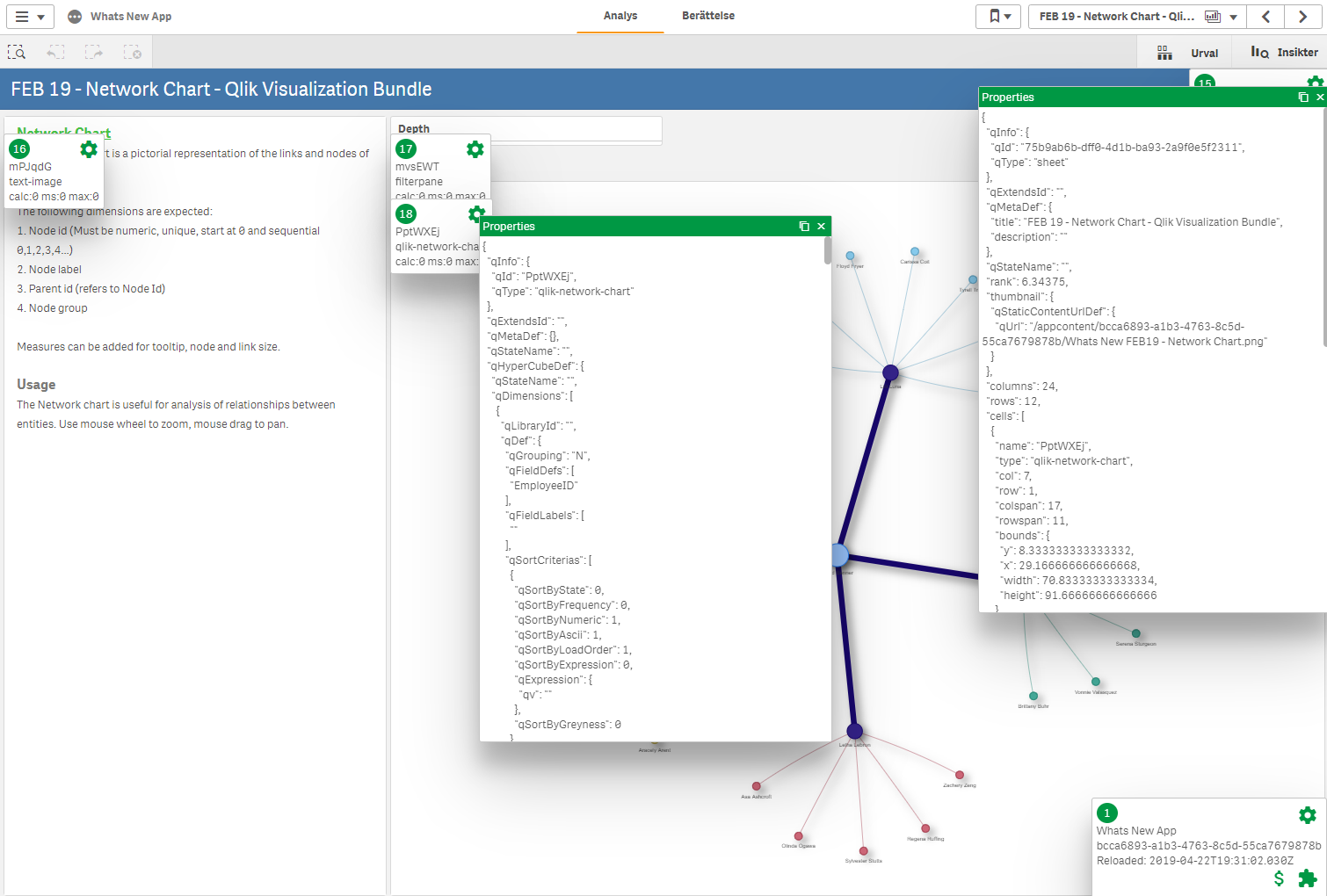
For all charts, sheets and the app you can click on the cogwheel.
That will display the properties for the object.
Use this to troubleshoot or to investigate what settings produce this chart.
You can display several objects properties at the same time, to make comparisons.
Properties can also be copied to clipboard.
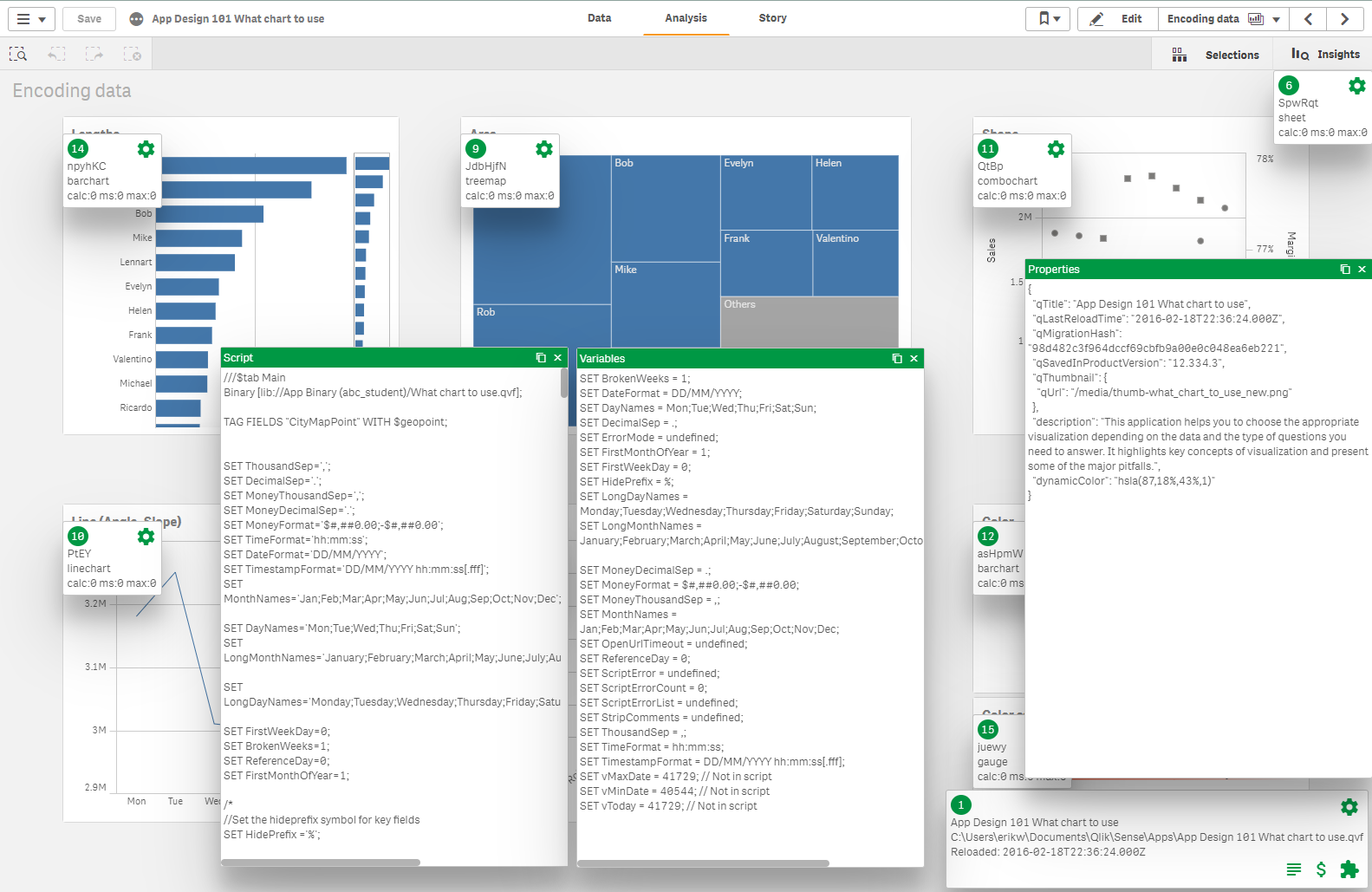
From the app box you can inspect the script, variables and app properties.
Windows can be open at the same time and moved.
You can also copy window contents, complete or partly, to the clipboard.
If you do not have access to the script the script button will not be available.
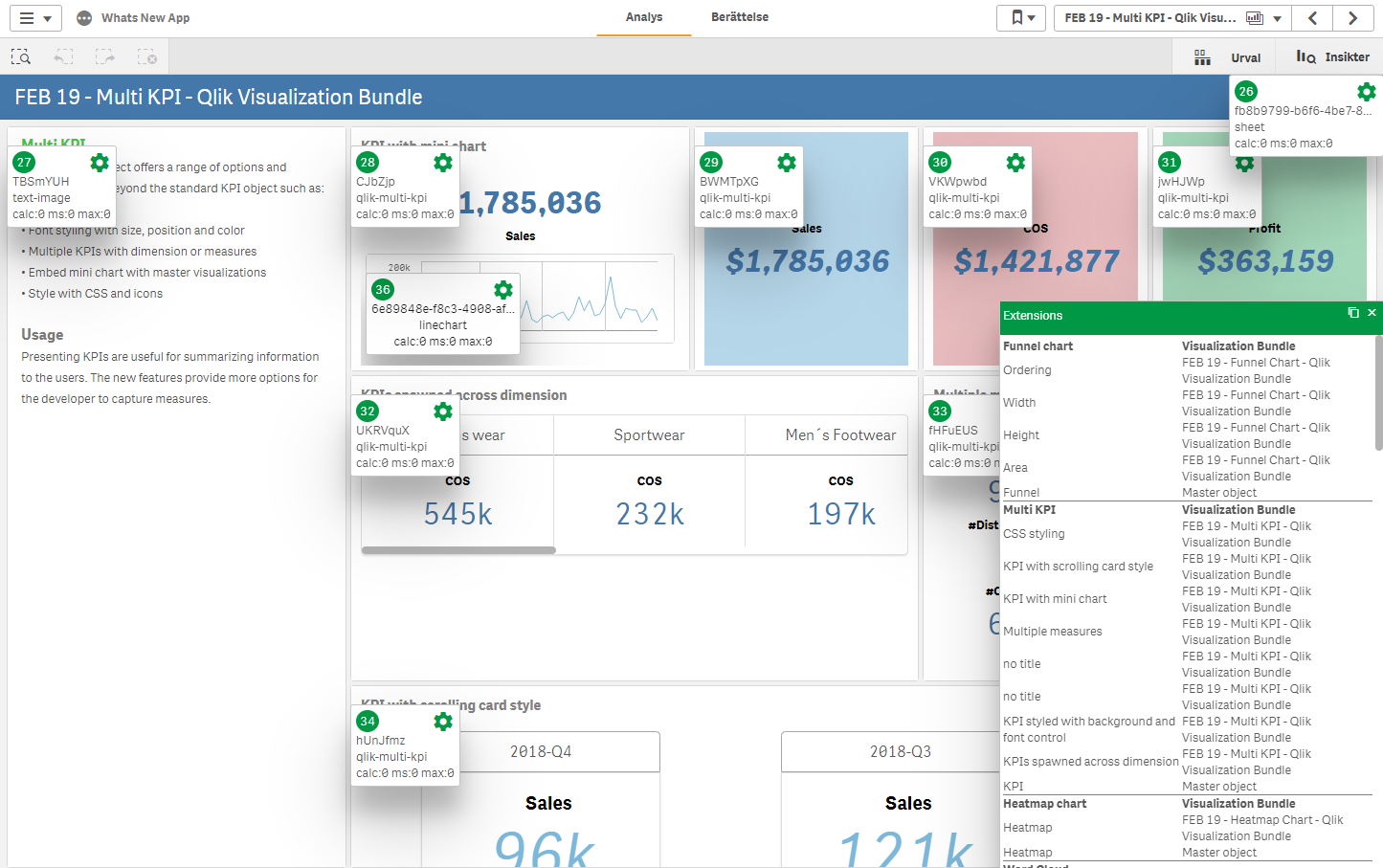
You can also easily see what extensions and charts are used in your app.
Just click on the extensions button in the app info box.
You will get a list of all axtensions and built-in charts are used in your extension, with title and sheet title
Master objects are also included.
The extension can also help you find performance problems.
When you enable the extension on a page, whether it's the standard client or a mashup, it will start recording recalculation times.
Every time an object is revalidated then extension will register time elapsed for recalculation.
It will also count how many revalidations has occured.
If the object is no longer on the screen, the extension will continue to monitor recalculations, so when you re-enable it you will get all the statistics.