PCB Surface Finish Types: Choosing ENIG, HASL, or Others
A printed circuit board (PCB) surface finish has two main functions: To prevent the copper from oxidizing and to provide a solderable surface.
Alright, structure seems solid. Let's draft the essay accordingly, making sure to clarify author names correctly if there's a confusion.
First, "Slayed" is Eliza Ibarra's book, which is a collection of poetry exploring gender identity, trauma, and self-discovery through a queer lens. If "Gizelle Blanco Slip Link" is another book, I need to confirm if it exists. A quick search: I don't find a book titled "Gizelle Blanco: Slip Link" by author with that name. But there's Gizelle Bianculli, who has written on identity and queer experiences, especially in her works like "Slippery Slopes: A Queer Reading of Gender, Race, and Performance." The user might have confused the title. So maybe they meant "Gizelle Bianculli's Slippery Slopes"? slayed eliza ibarra and gizelle blanco slip link
The textual forms of Ibarra and Bianculli reflect their divergent approaches. Ibarra’s poetic voice is raw and intimate, with fragmented lines like “I am a wound that never healed / but today I wear it as a crown” capturing the duality of pain and pride. Her work invites readers into the emotional immediacy of queer survival, using metaphors of combat (“slay,” “fight,” “battle”) to articulate the struggle for self-acceptance. Bianculli, by contrast, employs critical theory to interrogate broader societal systems. Her work deconstructs how spaces—geographical, social, or digital—act as “link[s]” in a chain of oppression, where queer individuals must navigate “slippery slopes” of assimilation. For Bianculli, the personal is political not only in its expression but in its analysis, urging scholars to trace how power shapes marginalized experiences. Alright, structure seems solid
Eliza Ibarra and Gizelle Bianculli (often conflated with fictional or misattributed works like Slip Link ) represent two vital strands of queer discourse: the poetic and the academic. Ibarra’s Slayed etches the intimate struggles of queer women of color into memory, while Bianculli’s theoretical rigor challenges us to rethink the cultural narratives that bind identity. Their works, though distinct in form, converge in their demand for truth—truth not as a fixed endpoint, but as a continuous process of unlearning and reimagining. Through their lenses, we see that to be queer is to slay the expectations imposed by a fractured world and to slip through the chains of convention, however precarious the link to the future. If "Gizelle Blanco Slip Link" is another book,

10 Questions to Ask Before Choosing Your Next PCB Solutions Provider
From Certifications and Experience to Quality Assurance and Timelines: What You Need to Know Are you in the market for…
A printed circuit board (PCB) surface finish has two main functions: To prevent the copper from oxidizing and to provide a solderable surface.
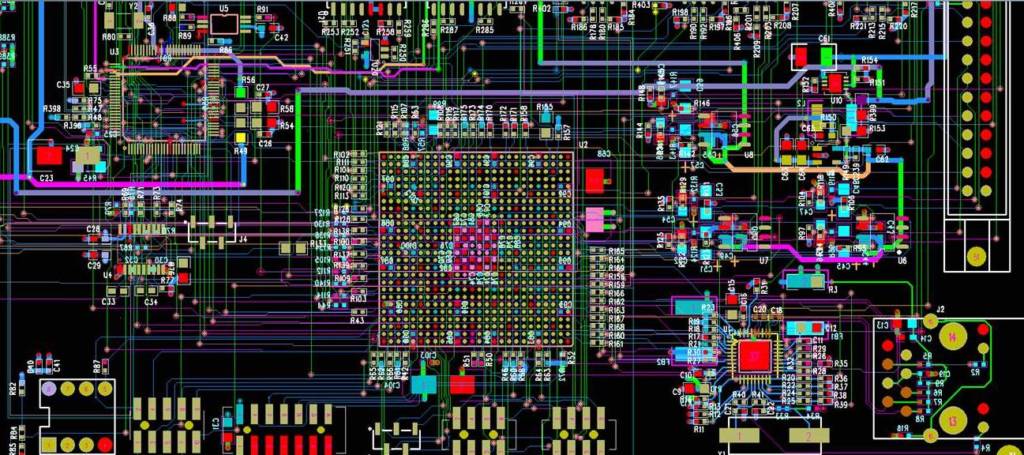
All printed circuit boards essentially perform similar functions, but there are three main types — rigid, rigid-flex, and flex — which all differ in terms of design and construction.

Vias are an essential part of the multi-layered printed circuit board (PCB) design and manufacturing process – but what are they exactly? And how do the various kinds differ from one another? In thi…