Indian families place great emphasis on values and etiquette. Respect for elders, tradition, and culture is deeply ingrained in the minds of family members. The concept of "Ahimsa" (non-violence) and "Dharma" (righteous living) guides their actions and decisions. Family members are taught to prioritize the needs of the family over individual desires.
India is a diverse and vibrant country with a rich cultural heritage. The Indian family is the backbone of this heritage, and its lifestyle and daily life stories are a reflection of the country's values, traditions, and history. In this write-up, we'll explore the intricacies of Indian family life, their daily routines, and the stories that make them unique.
Indian families are known for their rich cultural traditions. Festivals like Diwali, Holi, and Navratri are celebrated with great enthusiasm, with family members coming together to perform rituals, share sweets, and exchange gifts. Traditional attire, music, and dance are an integral part of these celebrations. Indian families place great emphasis on values and etiquette
In India, the joint family system is a common phenomenon, especially in rural areas. Extended family members live together under one roof, sharing responsibilities and resources. This system fosters a sense of unity, cooperation, and interdependence among family members. The elderly members play a vital role in passing down traditions, values, and cultural heritage to the younger generation.
A typical Indian family day begins early, with the morning prayer (Puja) and a quick breakfast. The family members then go about their daily chores, with the women usually taking care of household work and the men heading out to work or business. Children attend school, and after-school activities are a vital part of their daily routine. Family members are taught to prioritize the needs
Every Indian family has its own unique stories to tell. From the struggles of rural life to the triumphs of urban success, these stories reflect the resilience, adaptability, and strength of Indian families. Stories of love, sacrifice, and devotion are common, inspiring future generations to cherish their heritage.
Modernization and urbanization have brought significant changes to Indian family life. Many families are now nuclear, with members living separately. The influence of Western culture has led to changes in lifestyle, food habits, and entertainment. However, despite these changes, Indian families continue to hold on to their traditions and values. In this write-up, we'll explore the intricacies of
Mealtimes are sacred in Indian families. The traditional Indian thali, with its variety of dishes, is a staple in many households. Family members gather together to share meals, which are often accompanied by lively conversations and storytelling. The aroma of spices, the taste of homemade food, and the warmth of family bonding make mealtimes a cherished experience.
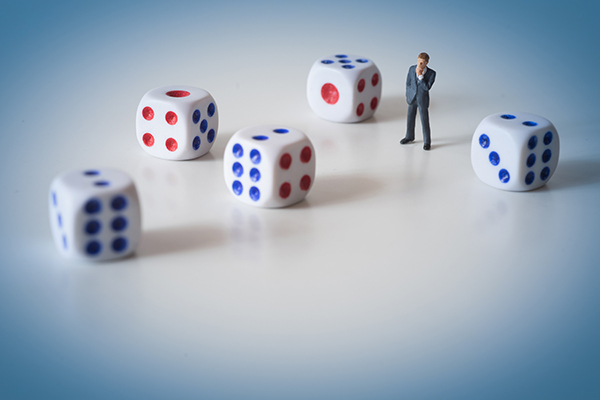
Probability calculations that can be used to inform decisions and manage risk can be very complicated. This unit is designed to help build your foundational understanding of probability and introduce you to some of the techniques that are used to calculate very difficult probabilities. You will continue to work with the Games Fair interactive tool and be exposed to real world situations to start to realize the impact of probability in your world.
The focus of this unit is on Probability Distributions. You will learn how to display all of the outcomes of a probability situation in a table and a bar graph. You will learn some formulas that will work with some situations. A large part of the unit will be calculating the expected value, or average, of a probability situation. The Games Fair Interactive tool will be used throughout the unit and will provide a focus for the summative and lead up to the Culminating Assignment, the Games Fair.
Probability calculations that can be used to inform decisions and manage risk can be very complicated. This unit is designed to help build your foundational understanding of probability and introduce you to some of the techniques that are used to calculate very difficult probabilities. You will continue to work with the Games Fair interactive tool and be exposed to real world situations to start to realize the impact of probability in your world.
After much work to collect valid and reliable information in the form of statistics, you will learn to analyse the statistics to make conclusions that can help make decisions. You will explore one real and two variables statistics using the World Map Interactive tool. A data set used will include a perceived quality of Health Care across Canada. The unit summative will be require you to act as a consultant for a large Canadian franchise to help them make a decision.

In Unit 3 of this course, you demonstrated how to represent the distribution of a discrete random variable. This unit will look at the distribution of continuous random variables and how they are compared to discrete variables. In the third and fourth activity, you will be introduced to what may be the most important mathematical function: the normal distribution.
In this unit, you will consolidate the concepts and skills you have learned throughout this course. You will complete the course culminating activity, through which you will analyze the impacts of energy transformation technologies on society and the environment.